
The Punjab District Gazetteer for Rawalpindi, published in 1907, gives the fullest British description of the Kethwals: where they lived, how many villages they held, the legend of their downfall and the names of their headmen.
خلاصہ: 1907ء کا راولپنڈی گزیٹیئر انگریز دور میں قبیلہ کیٹھوال کا سب سے مفصل سرکاری بیان ہے۔ اس کے مطابق کیٹھوال مغرب میں ڈھونڈوں اور مشرق میں ستیوں کے درمیان آباد تھے، ان کے پاس تین دیہات تھے جن میں چڑہان تحصیل مری کا سب سے بڑا گاؤں تھا، اور وہ چار بڑے پہاڑی قبائل میں سب سے پرانے آباد کار تھے۔ گزیٹیئر میں چڑہان کے نمبرداروں شاہ نواز، فیروز خان اور حیات اللہ خان کے نام بھی درج ہیں۔ اس مضمون میں اصل انگریزی متن اور اس کا مکمل اردو ترجمہ دیا گیا ہے۔
The full entry
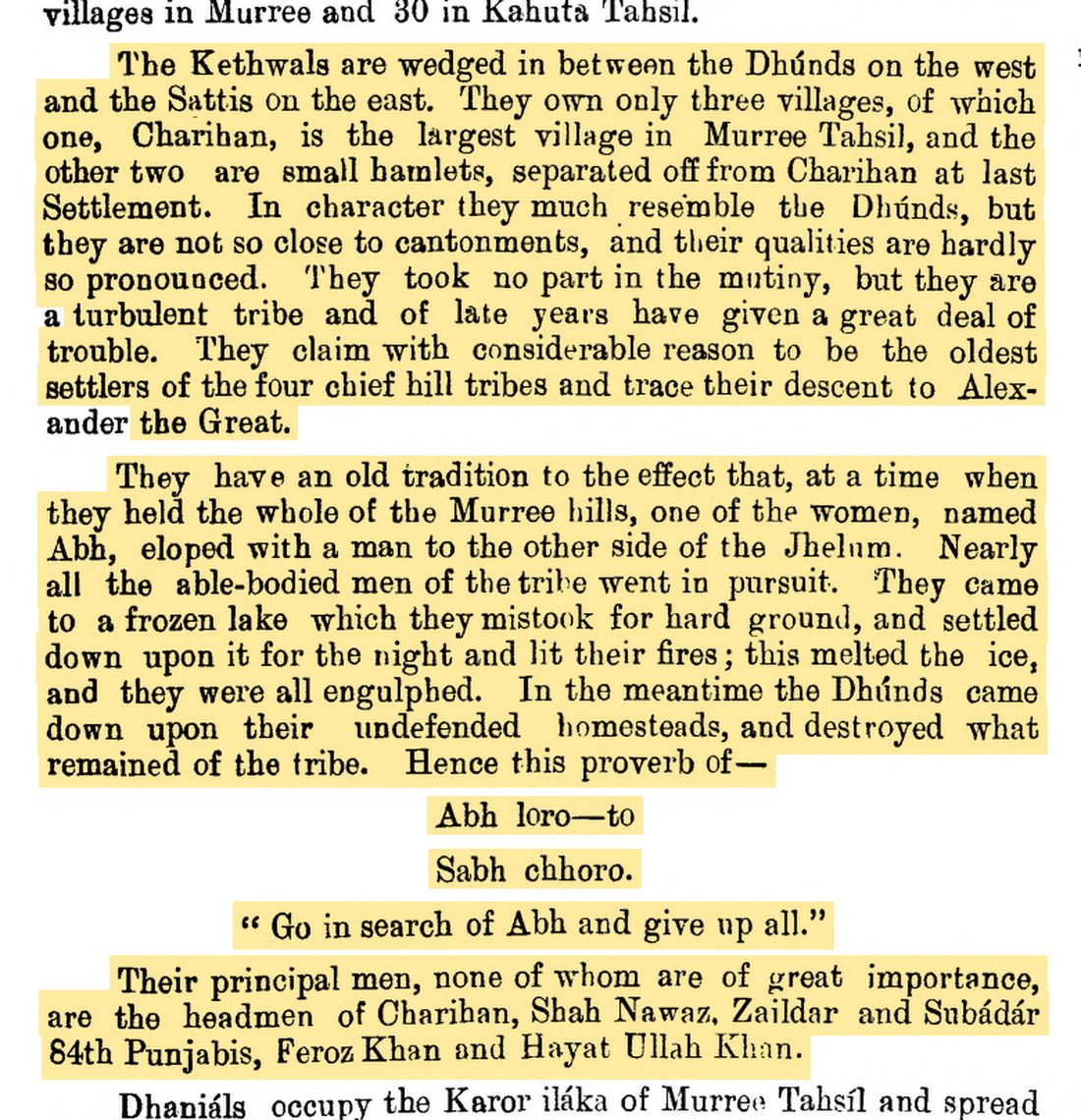
“The Kethwals are wedged in between the Dhunds on the west and the Sattis on the east. They own only three villages, of which one, Charihan, is the largest village in Murree Tahsil, and the other two are small hamlets, separated off from Charihan at last Settlement. In character they much resemble the Dhunds, but they are not so close to cantonments, and their qualities are hardly so pronounced. They took no part in the mutiny, but they are a turbulent tribe and of late years have given a great deal of trouble. They claim with considerable reason to be the oldest settlers of the four chief hill tribes and trace their descent to Alexander the Great. They have an old tradition to the effect that, at a time when they held the whole of the Murree hills, one of the women, named Abh, eloped with a man to the other side of the Jhelum. Nearly all the able-bodied men of the tribe went in pursuit. They came to a frozen lake which they mistook for hard ground, and settled down upon it for the night and lit their fires; this melted the ice, and they were all engulphed. In the meantime the Dhunds came down upon their undefended homesteads, and destroyed what remained of the tribe. Hence this proverb of — Abh loro — to Sabh chhoro. “Go in search of Abh and give up all.” Their principal men, none of whom are of great importance, are the headmen of Charihan, Shah Nawaz, Zaildar and Subadar 84th Punjabis, Feroz Khan and Hayat Ullah Khan.”
Punjab District Gazetteers, Rawalpindi District, 1907, Part A, Chapter I, Section C, “Kethwals”
اردو ترجمہ: کیٹھوال مغرب میں ڈھونڈوں اور مشرق میں ستیوں کے درمیان گھرے ہوئے ہیں۔ ان کے پاس صرف تین دیہات ہیں، جن میں سے ایک، چڑہان، تحصیل مری کا سب سے بڑا گاؤں ہے، اور باقی دو چھوٹی بستیاں ہیں جو پچھلے بندوبست میں چڑہان سے الگ کی گئیں۔ مزاج میں وہ بہت حد تک ڈھونڈوں سے ملتے جلتے ہیں، لیکن وہ چھاؤنیوں کے اتنے قریب نہیں رہتے، اس لیے ان کی یہ خصوصیات اتنی نمایاں نہیں۔ انہوں نے غدر (1857ء) میں کوئی حصہ نہیں لیا، لیکن وہ ایک سرکش قبیلہ ہیں اور حالیہ برسوں میں انہوں نے کافی پریشانی پیدا کی ہے۔ وہ کافی حد تک بجا طور پر یہ دعویٰ کرتے ہیں کہ وہ چار بڑے پہاڑی قبائل میں سب سے پرانے آباد کار ہیں، اور اپنا نسب سکندرِ اعظم سے جوڑتے ہیں۔ ان کی ایک پرانی روایت ہے کہ جب مری کی تمام پہاڑیاں ان کے قبضے میں تھیں، تو ابھ نام کی ایک عورت ایک مرد کے ساتھ دریائے جہلم کے پار بھاگ گئی۔ قبیلے کے تقریباً تمام جوان مرد اس کے تعاقب میں نکلے۔ وہ ایک جمی ہوئی جھیل پر پہنچے جسے انہوں نے سخت زمین سمجھا، رات گزارنے کے لیے اسی پر پڑاؤ ڈالا اور آگ جلائی؛ آگ سے برف پگھل گئی اور وہ سب ڈوب گئے۔ اسی دوران ڈھونڈ ان کے بے سہارا گھروں پر چڑھ آئے اور قبیلے کے باقی ماندہ لوگوں کو تباہ کر دیا۔ اسی سے یہ کہاوت بنی: «ابھ لوڑو، تو سبھ چھوڑو» یعنی «ابھ کو ڈھونڈنے نکلو اور سب کچھ گنوا بیٹھو۔» ان کے سرکردہ افراد، جن میں سے کوئی بھی بہت بڑی حیثیت نہیں رکھتا، چڑہان کے نمبردار ہیں: شاہ نواز، جو ذیلدار اور 84ویں پنجابی رجمنٹ میں صوبیدار ہیں، فیروز خان اور حیات اللہ خان۔
Charihan, the Kethwal zail
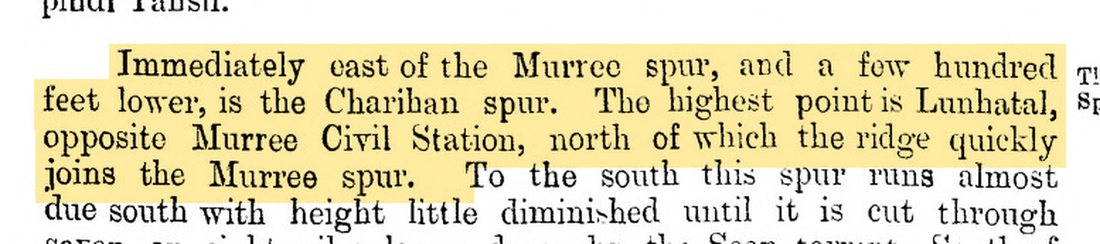
The gazetteer describes the hills of Murree as five parallel spurs. The Kethwal country lies on the second of them:
“Immediately east of the Murree spur, and a few hundred feet lower, is the Charihan spur. The highest point is Lunhatal, opposite Murree Civil Station, north of which the ridge quickly joins the Murree spur.”
Punjab District Gazetteers, Rawalpindi District, 1907, Part A, Chapter I, Section A
اردو ترجمہ: مری کے پہاڑی سلسلے کے فوراً مشرق میں، چند سو فٹ نیچے، چڑہان کا پہاڑی سلسلہ ہے۔ اس کا سب سے اونچا مقام لُنہتال ہے، جو مری سول اسٹیشن کے سامنے ہے، اور اس کے شمال میں یہ سلسلہ جلد ہی مری کے سلسلے سے جا ملتا ہے۔
In the list of zails, the groups of villages placed under one zaildar, Charihan appears as a zail of two villages paying Rs 3,200 a year in land revenue, with the Kethwals as the prevailing tribe.
Life around the hill station
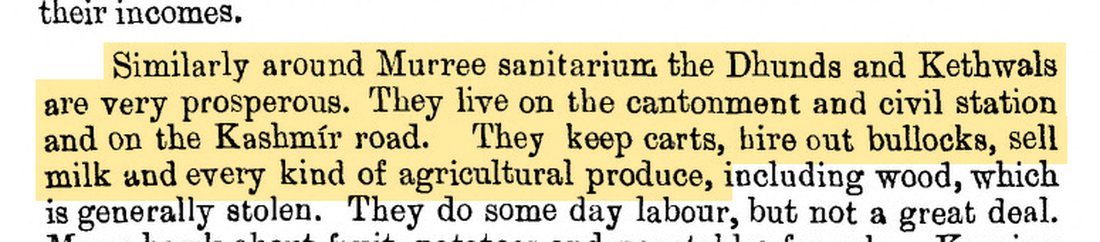
“Similarly around Murree sanitarium the Dhunds and Kethwals are very prosperous. They live on the cantonment and civil station and on the Kashmir road. They keep carts, hire out bullocks, sell milk and every kind of agricultural produce …”
Punjab District Gazetteers, Rawalpindi District, 1907, Part A, Chapter II
اردو ترجمہ: اسی طرح مری کے صحت افزا مقام کے ارد گرد ڈھونڈ اور کیٹھوال بہت خوشحال ہیں۔ ان کی روزی چھاؤنی، سول اسٹیشن اور کشمیر روڈ سے وابستہ ہے۔ وہ چھکڑے رکھتے ہیں، بیل کرائے پر دیتے ہیں، اور دودھ اور ہر قسم کی زرعی پیداوار بیچتے ہیں …
An agricultural tribe in law
The gazetteer lists the Kethwals among the tribes notified under the Punjab Alienation of Land Act of 1900, the law that protected the land of “agricultural tribes” from passing to moneylenders:
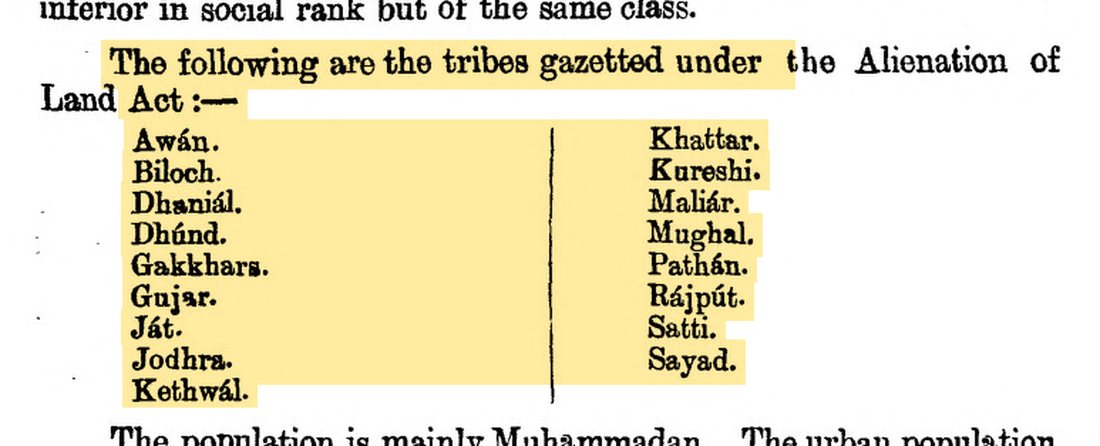
The same chapter says that in the hills a price was paid for the bride, and that the Dhunds, Sattis, Kethwals, Dhanials and Jaskams intermarried.
For the earlier figures, see the censuses of 1881 and 1891; for a short overview of all the British records, see What British-era records say about the Kethwals.
Sources
- Punjab District Gazetteers, Rawalpindi District, 1907, Part A: Chapter I, Sections A (“The Charihan Spur”) and C (“Kethwals”, “Tribes and castes”); Chapter III, list of zails.