
Every Kethwal carries his name. Tradition says the tribe is called after Mian Ketho (Katho) Khan, a chief born in 1560 who led the hills for about fifty years. The shajra places him at the head of the whole family tree.
خلاصہ: روایت کے مطابق قبیلہ کیٹھوال کا نام سردار میاں کیٹھو خان کے نام پر ہے، جو 1560ء میں پیدا ہوئے اور تقریباً نصف صدی تک اس علاقے کے سردار رہے۔ شجرہ میں ان کا نسب «کیٹھو ولد بہاگ سی ولد شیرسی ولد جیرسی» درج ہے، اور ان کے بیٹے جوہد، بہگانہ اور مندرہ ہیں۔ آج کے کیٹھوال ان سے تقریباً 17 سے 19 نسلیں نیچے ہیں، جو اوسطاً 25 سے 30 سال فی نسل کے حساب سے انہیں پندرہویں اور سولہویں صدی عیسوی میں رکھتا ہے۔
The tradition
The account most often repeated, first published on a Kethwal blog in 2011 and since copied by other websites, says that the word Kethwal comes from the chief Mian Katho Khan, who was born in 1560 and ruled over the area for half a century. No older written source for the year has yet been found.
Ketho Khan in the shajra
In the shajra on this website, Ketho Khan (کیٹھو) stands at the head of the tree. Khayaban e Kethwalan gives his line as:
کیٹھو ولد بہاگ سی ولد شیرسی ولد جیرسی
Khayaban e Kethwalan, page 5
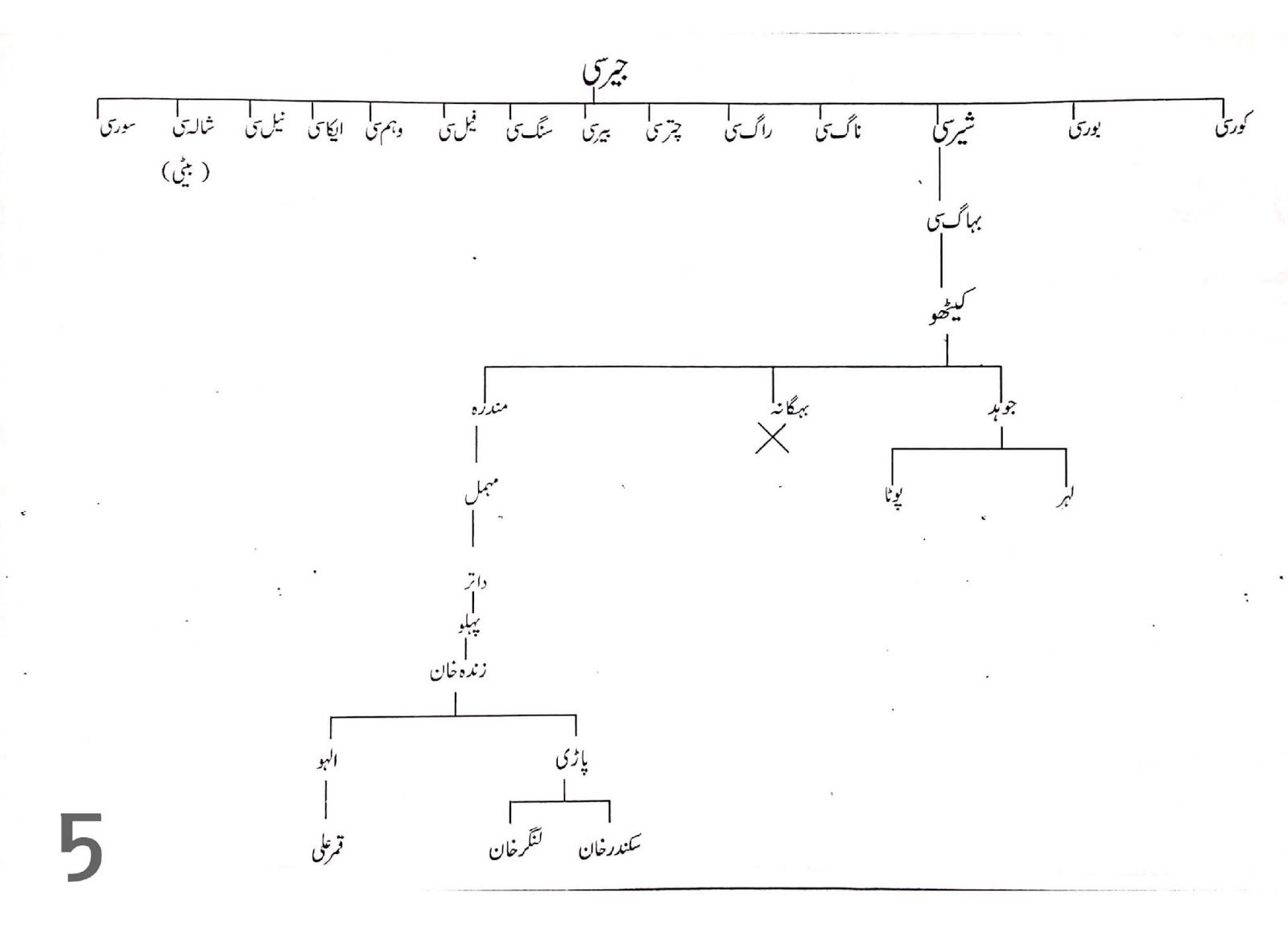
His recorded sons are Johad (جوہد), Bhagana (بہگانہ) and Mandra (مندرہ). The thirteen pattis of the Johad branch in Tareekh Qabeela Kethwal (the Handal, Rawal, Kamal, Kala, Molu and Sahu tarafs) and the three pattis of Dheer Kot Kethwalan all lead back to him.
Does 1560 fit the shajra?
A rough check is possible. Kethwals living today stand about 17 to 19 generations below Ketho Khan; the author of this website is in the 18th. At 25 to 30 years a generation, 18 generations reach back about 450 to 540 years. That puts Ketho Khan’s birth somewhere between the mid-1400s and the mid-1500s: close enough to 1560 to make the tradition plausible, since written shajras often skip or merge generations.
It also raises a question: if Ketho Khan lived in the 1500s, then the people who accepted Islam at Potha Sharif in 1372–1384 were his forefathers, before the tribe carried his name.
Help complete the picture
Do you know a story about Mian Ketho Khan, his sons, or where he lived and is buried? Please share it, or find your own line in the shajra and see how many generations separate you from him.
Sources
- Kethwals: Introduction (blog, 2011): Mian Katho Khan, born 1560.
- Fahmeed ur Rahman Kethwal, Khayaban e Kethwalan, page 5.
- Tareekh Qabeela Kethwal, the Johad branch.
- Ketho Khan in the shajra on kethwal.pk.