
Long before Murree became a hill station, the Kethwals were living on its slopes. The tribe’s own traditions say so, and every British record of the hill tribes agrees: of the four chief tribes of the Murree Hills, the Kethwals were there first.
خلاصہ: انگریز دور کے تمام سرکاری ریکارڈ اس بات پر متفق ہیں کہ کیٹھوال مری کی پہاڑیوں کے سب سے پرانے باشندے ہیں، جو ڈھونڈ اور ستی قبائل سے بھی پہلے یہاں آباد تھے۔ اس مضمون میں راولپنڈی گزیٹیئر (1893–94ء اور 1907ء) اور ایچ اے روز کی گلاسری کے اصل الفاظ اور ان کا اردو ترجمہ پیش کیا گیا ہے، ساتھ ہی «ابھ» کی پرانی روایت بھی، جس کے مطابق قبیلہ ایک ہی رات میں اپنے جوانوں سے محروم ہو گیا۔
“The oldest settlers of the four chief hill tribes”
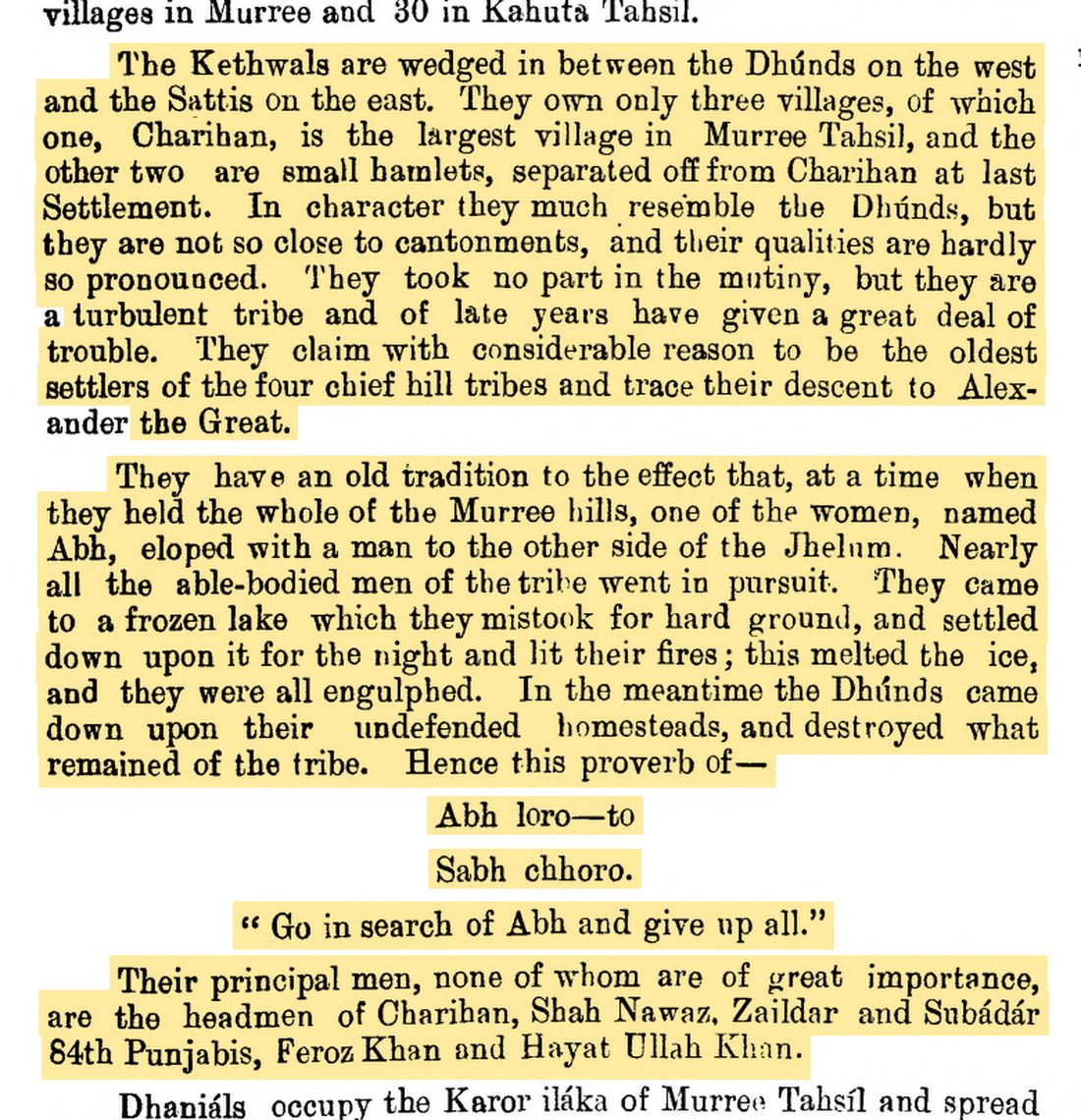
The Rawalpindi gazetteers describe four chief hill tribes: the Dhund, the Satti, the Dhanial and the Kethwal. Of the Kethwals, the 1907 edition writes:
“They claim with considerable reason to be the oldest settlers of the four chief hill tribes and trace their descent to Alexander the Great.”
Punjab District Gazetteers, Rawalpindi District, 1907, Part A, Chapter I, Section C
اردو ترجمہ: وہ کافی حد تک بجا طور پر یہ دعویٰ کرتے ہیں کہ وہ چار بڑے پہاڑی قبائل میں سب سے پرانے آباد کار ہیں، اور اپنا نسب سکندرِ اعظم سے جوڑتے ہیں۔
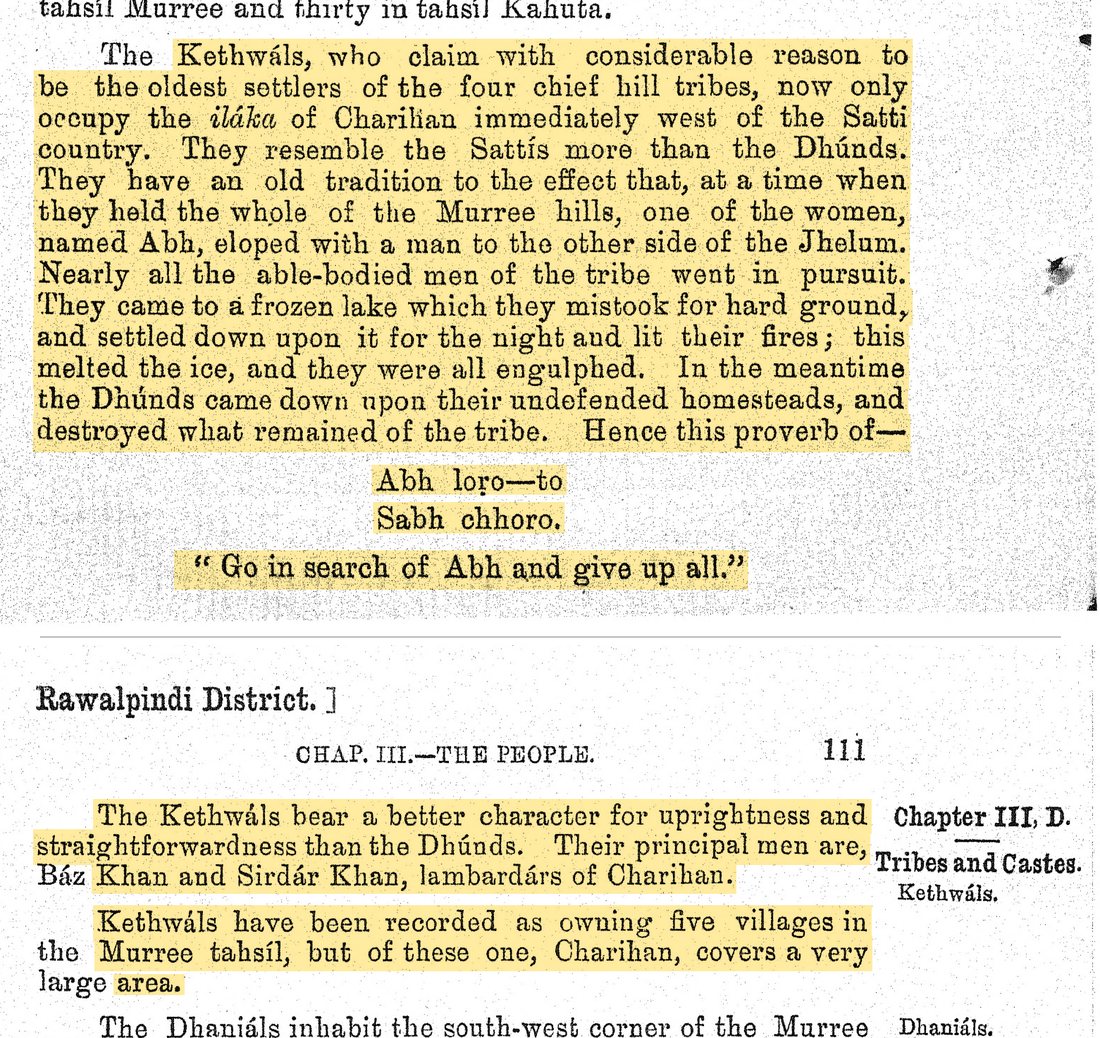
The edition of 1893–94 used almost the same words, and added where the tribe had been left by then:
“Kethwals, who claim with considerable reason to be the oldest settlers of the four chief hill tribes, now only occupy the ilaka of Charihan immediately west of the Satti country.”
Gazetteer of the Rawalpindi District, revised edition, 1893–94, Chapter III
اردو ترجمہ: کیٹھوال، جو کافی حد تک بجا طور پر چار بڑے پہاڑی قبائل میں سب سے پرانے آباد کار ہونے کا دعویٰ کرتے ہیں، اب صرف چڑہان کے علاقے میں رہ گئے ہیں، جو ستی علاقے کے بالکل مغرب میں ہے۔
Rose’s Glossary
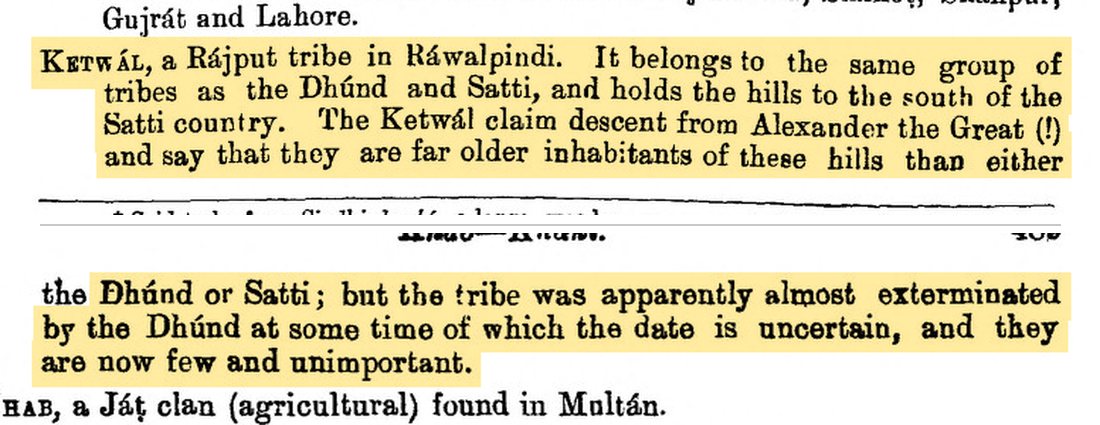
H. A. Rose’s Glossary, the standard British reference on the tribes of the Punjab, spells the name Ketwal (and also Khaintwal). Its full entry reads:
“Ketwal, a Rajput tribe in Rawalpindi. It belongs to the same group of tribes as the Dhund and Satti, and holds the hills to the south of the Satti country. The Ketwal claim descent from Alexander the Great (!) and say that they are far older inhabitants of these hills than either the Dhund or Satti; but the tribe was apparently almost exterminated by the Dhund at some time of which the date is uncertain, and they are now few and unimportant.”
H. A. Rose, A Glossary of the Tribes and Castes of the Punjab and North-West Frontier Province, Vol. II (1911)
اردو ترجمہ: کیٹھوال (Ketwal)، راولپنڈی کا ایک راجپوت قبیلہ۔ یہ ڈھونڈ اور ستی قبائل کے گروہ سے تعلق رکھتا ہے اور ستی علاقے کے جنوب کی پہاڑیوں پر آباد ہے۔ کیٹھوال سکندرِ اعظم کی نسل سے ہونے کا دعویٰ کرتے ہیں (!) اور کہتے ہیں کہ وہ ان پہاڑیوں میں ڈھونڈ اور ستی دونوں سے کہیں پرانے باشندے ہیں؛ لیکن بظاہر کسی نامعلوم زمانے میں ڈھونڈوں نے اس قبیلے کو تقریباً ختم کر دیا تھا، اور اب وہ تعداد میں کم اور غیر اہم رہ گئے ہیں۔
The legend of Abh
How did the oldest tribe of the hills become one of the smallest? The gazetteers preserve the Kethwals’ own answer, a story still told in the villages (it is on the 1907 page shown above):
“They have an old tradition to the effect that, at a time when they held the whole of the Murree hills, one of the women, named Abh, eloped with a man to the other side of the Jhelum. Nearly all the able-bodied men of the tribe went in pursuit. They came to a frozen lake which they mistook for hard ground, and settled down upon it for the night and lit their fires; this melted the ice, and they were all engulphed. In the meantime the Dhunds came down upon their undefended homesteads, and destroyed what remained of the tribe. Hence this proverb of — Abh loro — to Sabh chhoro. “Go in search of Abh and give up all.””
Punjab District Gazetteers, Rawalpindi District, 1907, Part A, Chapter I, Section C
اردو ترجمہ: ان کی ایک پرانی روایت ہے کہ جب مری کی تمام پہاڑیاں ان کے قبضے میں تھیں، تو ابھ نام کی ایک عورت ایک مرد کے ساتھ دریائے جہلم کے پار بھاگ گئی۔ قبیلے کے تقریباً تمام جوان مرد اس کے تعاقب میں نکلے۔ وہ ایک جمی ہوئی جھیل پر پہنچے جسے انہوں نے سخت زمین سمجھا، رات گزارنے کے لیے اسی پر پڑاؤ ڈالا اور آگ جلائی؛ آگ سے برف پگھل گئی اور وہ سب ڈوب گئے۔ اسی دوران ڈھونڈ ان کے بے سہارا گھروں پر چڑھ آئے اور قبیلے کے باقی ماندہ لوگوں کو تباہ کر دیا۔ اسی سے یہ کہاوت بنی: «ابھ لوڑو، تو سبھ چھوڑو» یعنی «ابھ کو ڈھونڈنے نکلو اور سب کچھ گنوا بیٹھو۔»
Older than the records
The tribe’s other traditions reach further back. One says the first ancestor came from Kerman in Iran and travelled east into these hills; another, that the Kethwals are of Rajput descent. The chapters on the tribe’s ancient settlements and old graveyards (jeeran) in Master Sabeer Satti’s Tareekh Qabeela Kethwal trace Kethwal villages and burial grounds across Kohsar. Raja Waqar Kethwal sums up one sign of their age:
کیٹھوالوں اور کڑرالوں کی قبریں شرقاً غرباً ہوتی تھیں ۔۔۔۔ ان کے قبرستان جیران کہلاتے تھے۔
Raja Waqar Kethwal, «کوہسار کا پہلا قبرستان», in Dastan-e-Qabeela Kethwal
Graves laid east to west belong to the time before Islam; after the tribe became Muslim, graves were dug north to south. Read more in When the Kethwals embraced Islam, the censuses of 1881 and 1891 and the Rawalpindi Gazetteer of 1907.
Sources
- Punjab District Gazetteers, Rawalpindi District, 1907, Part A, Chapter I, Section C (“Kethwals”).
- Gazetteer of the Rawalpindi District, revised edition, 1893–94, Chapter III, Section B (“Kethwals”).
- H. A. Rose, A Glossary of the Tribes and Castes of the Punjab and North-West Frontier Province, Vol. II (1911), entry “Ketwal”.
- Raja Waqar Kethwal (comp.), Dastan-e-Qabeela Kethwal, chapter «کوہسار کا پہلا قبرستان».